Custom Zamac Cap: Discover the Luxury Feature of Your Fragrance
- Share
- publisher
- GP Bottles
- Issue Time
- Mar 20,2026
Summary
Discover why niche perfume brands choose custom Zamac caps for that heavy, luxury feel. Learn about the material, production process, costs, and lead times.
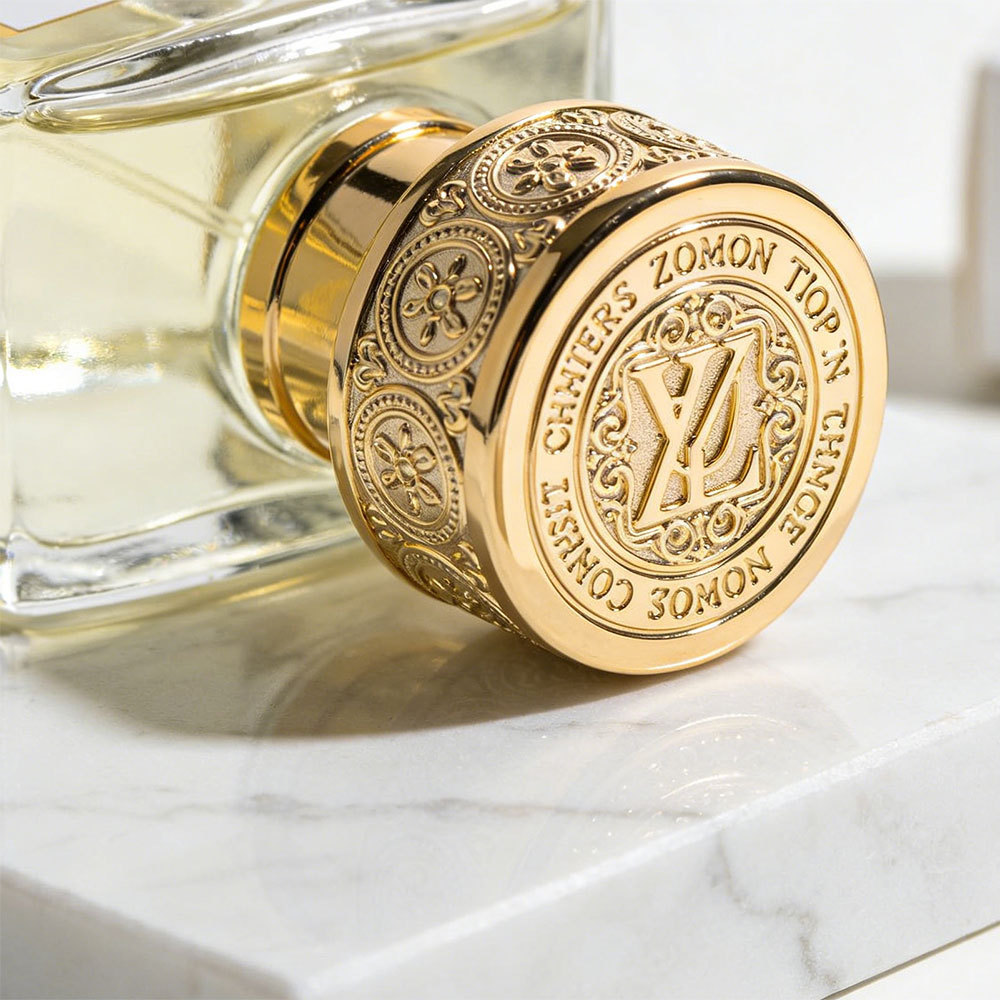
As a niche perfume brand owner, you know that packaging is more than just a container—it is the first physical touchpoint between your story and your customer. In a market saturated with glass and plastic, the details matter. One of the easiest ways to elevate your brand from "homemade" to "haute couture" is by upgrading your bottle cap.
Enter the Zamac perfume cap. If you are looking for that solid "thud" when the bottle is placed on a table, or the cool, smooth touch that signals quality, Zamac is your answer. At GPBottles, we specialize in manufacturing custom perfume bottles and caps for niche brands. Let’s explore why Zamac might be the perfect fit for your next fragrance launch.
Why Choose a Zamac Cap for Your Perfume Packaging?
Imagine a customer unboxing your perfume. They see the bottle, but the first thing they feel is the cap. If it is lightweight and hollow, it can cheapen the entire experience—even if the juice inside is worth a fortune.
Zamac offers a "weighty" presence. It feels substantial and durable. This material is traditionally used by luxury powerhouses because it allows for intricate, sharp details that are impossible to achieve with plastic. For a niche brand trying to carve out a unique identity, a custom Zamac cap acts as a statement piece. It tells your customer, "This is a premium product crafted with care."
Understanding Zamac: The Material of Detail
So, what exactly is Zamac? The name is an acronym derived from the materials that make up the alloy: Zinc, Aluminum, Magnesium, and Copper (often referred to as Zamak)
Characteristics and Advantages
- ·Weight and Prestige: Zamac is significantly heavier than plastic. This weight is universally associated with quality and luxury in the fragrance world.
- ·Corrosion Resistance: Unlike some metals, Zamac naturally resists corrosion. Since perfume is a chemical mixture, this is vital to prevent the cap from degrading over time.
- ·Exceptional Detail: Because Zamac is die-cast (injected into a mold under pressure), it captures every tiny line and texture of your design. This makes it perfect for detailed logos, geometric patterns, or unique textures.
Customization: Shapes, Colors, and Finishes
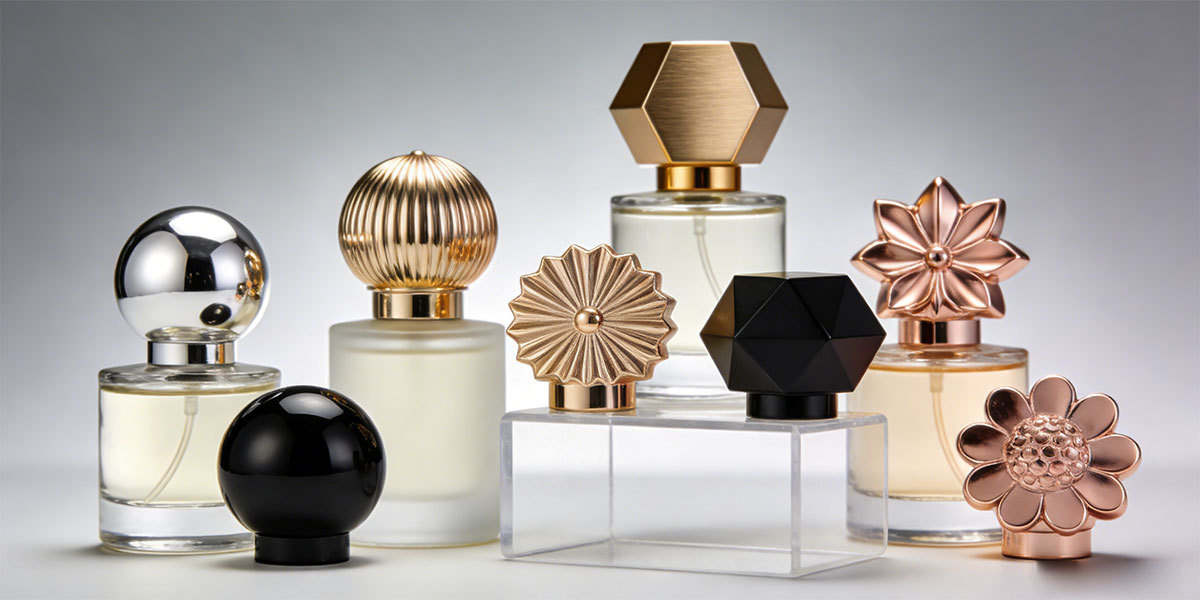
- ·Shapes: You can create almost any shape—from classic bullets and crowns to abstract sculptural forms, animal figures, or architectural designs.
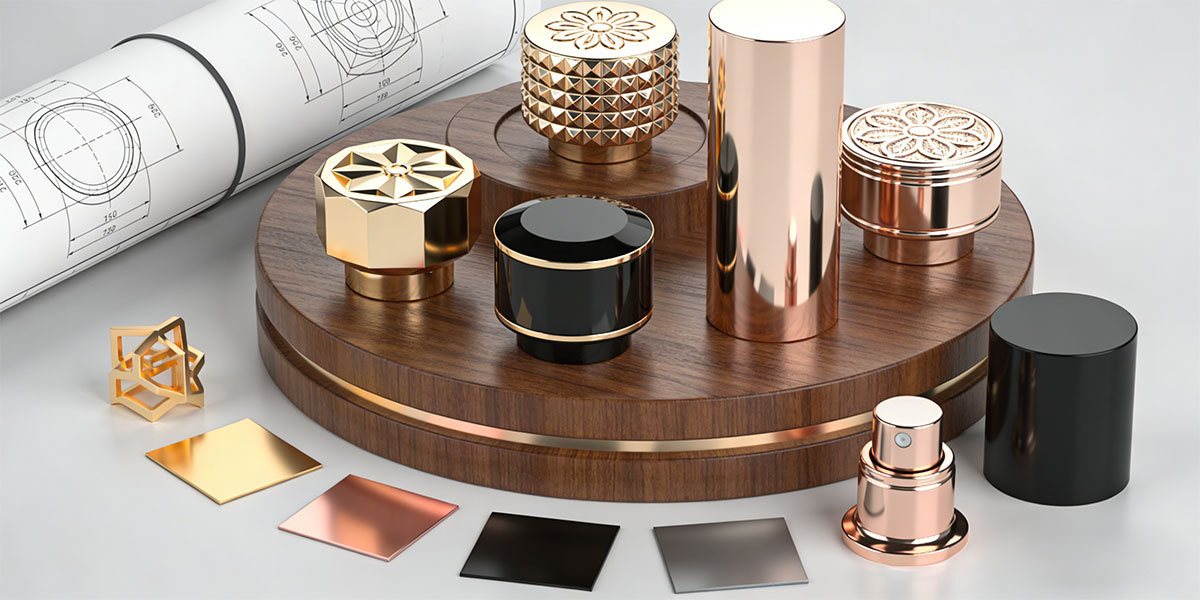
- ·Colors & Finishes: While Zamac is a silver-gray metal, it acts as a perfect canvas for other metals and colors. You can have it electroplated in real gold, rose gold, chrome, or ruthenium for a mirror polish, or you can apply a matte lacquer, gunmetal, or even bold colors like deep blue or ruby red.
A Note on Limitations
While amazing, Zamac is an investment. While the molds are much cheaper than plastic cap molds, but the unit price is more expensive than plastic cap. However, for a brand aiming for a high-end shelf presence, the return on investment in terms of brand perception is immense.
Understanding the Production Process
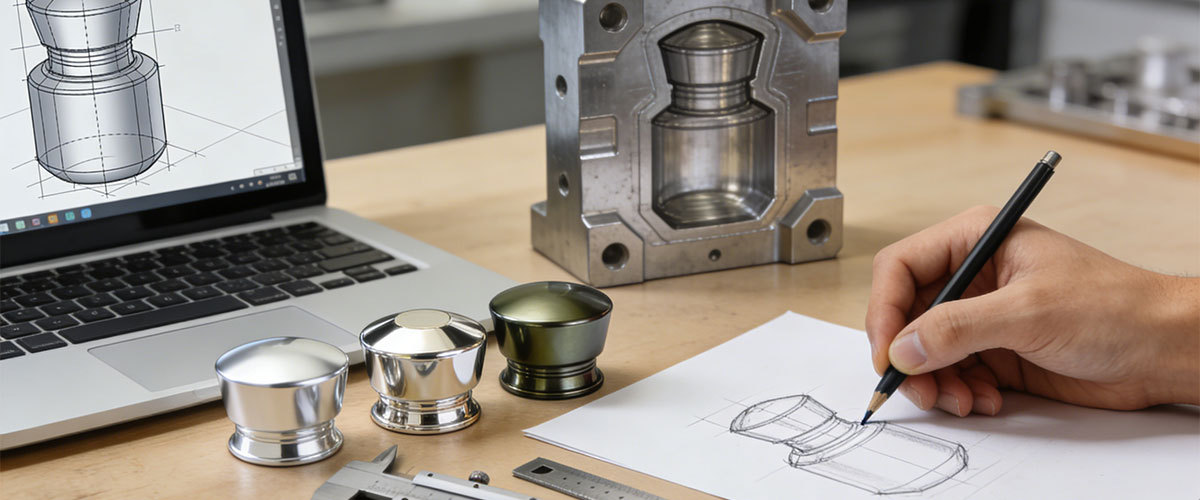
How does a raw block of metal become your signature bottle topper? At GPBottles, the journey from sketch to sample is a meticulous process involving several steps. Understanding this helps you plan your product launch timeline.
Step 1: Design & 3D Modeling
It all starts with an idea. Whether you come to us with a technical drawing or a napkin sketch, our engineers will create a precise 3D STP file and rendering pictures. This ensures every curve and angle is accounted for.
Step 2: Mold Making
Custom Zamac caps require a dedicated die-cast mold. This is a tool made from hardened steel. Because creating this mold is precision work, it takes time and is the primary reason for the initial investment . You can also select our standard cap mold and customize personalized label or specified finish and color.
Step 3: Die-Casting
Once the mold is ready, molten Zamac alloy is shot into the mold under high pressure. This is called die-casting. It fills every crevice of the mold instantly, creating the rough shape of your cap.
Step 4: Trimming & CNC Machining
After casting, the caps have small excess bits (called flash) that need to be trimmed. They often go through a CNC lathe to ensure the internal threads or seating surfaces are perfectly smooth and round .
Step 5: Polishing
Before plating, the caps are polished. This smooths the surface to prepare it for the final color. A high-polish finish results in a mirror shine, while a satin finish is achieved with different abrasives.
Step 6: Finishing (Electroplating/UV Coating)
This is where your cap gets its color. Caps are submerged in tanks for electroplating to apply gold, silver, or other metallic finishes. If you want a solid color (like black or red), UV coating or spray coating is applied.
Step 7: Assembly & Quality Control
If your cap requires an inner plastic insert (to help it grip the sprayer or screw onto the bottle) or extral magnet parts, it is assembled here. Every cap is then inspected for scratches, plating defects, and fit.
Understanding Price Factors
As a small niche brand, budgeting is crucial. The cost of a Zamac cap is variable, and it helps to know what influences the final price.
Key Price Factors:
- Mold Cost: This is a one-time fee. The more complex your design, the higher the mold cost. However, once the mold is paid for, the unit price drops significantly for future orders.
- Complexity of Design: A simple round cap is cheaper than a cap with sharp angles, undercuts, or detailed engraving.
- Finishing: Standard plating (like shiny silver) is generally more affordable than special finishes like brush gold, antique-effect (like the Jo Malone collection) , natrual color with brush.
- Size & Weight: Since Zamac is sold by weight and volume, a larger, thicker cap will cost more than a slim one.
Typical Production Metrics:
- Custom Tooling/Mold Time:4-5 weeks
- Production Lead Time: Once samples are approved, mass production typically takes 6-8 weeks. (Note: Some suppliers may quote faster, but for high-quality finishing and proper curing time for platings, 45-50 days is a safe standard for quality assurance) .
- Minimum Order Quantity (MOQ): Due to the complexity of production process, Zamac caps generally have regular MOQs ranging from 3,000 to 5,000 pieces per design at GPBottles.
Why Choose GPBottles for Your Custom Zamac Caps?
At GPBottles, we bridge the gap between luxury manufacturing and the agile needs of niche brands. We understand that you are not a mass-market conglomerate; you are an artist, a storyteller, and a visionary.
We Offer:
- End-to-End Customization: From your initial sketch to the finished product landing at your door.
- Quality Assurance: We don't just cast metal; we craft experiences. We ensure precise plating adhesion (no peeling!) and perfect fitting.
- Expert Guidance: Not sure if your design is feasible? We help you optimize your design to reduce costs without sacrificing your vision.
- Reliable Timelines: We respect that you have a launch date. Our 45-50 day production cycle is managed with constant updates to ensure you stay on track.
Ready to give your fragrance the weight it deserves?
Contact GPBottles today. Let’s create a cap that tells your story before the scent even touches the skin.