How Perfume Bottles Are Made: From Molten Glass to Finished Bottle
- Share
- publisher
- GPBottles
- Issue Time
- Sep 21,2026
Summary
How perfume bottles are made, from the raw silica batch and melting at 1,500°C through forming, annealing, decoration and assembly. Learn blow-and-blow vs press-and-blow, why annealing prevents breakage, and how GPBottles handles custom molding, REACH-compliant glass and full decoration.
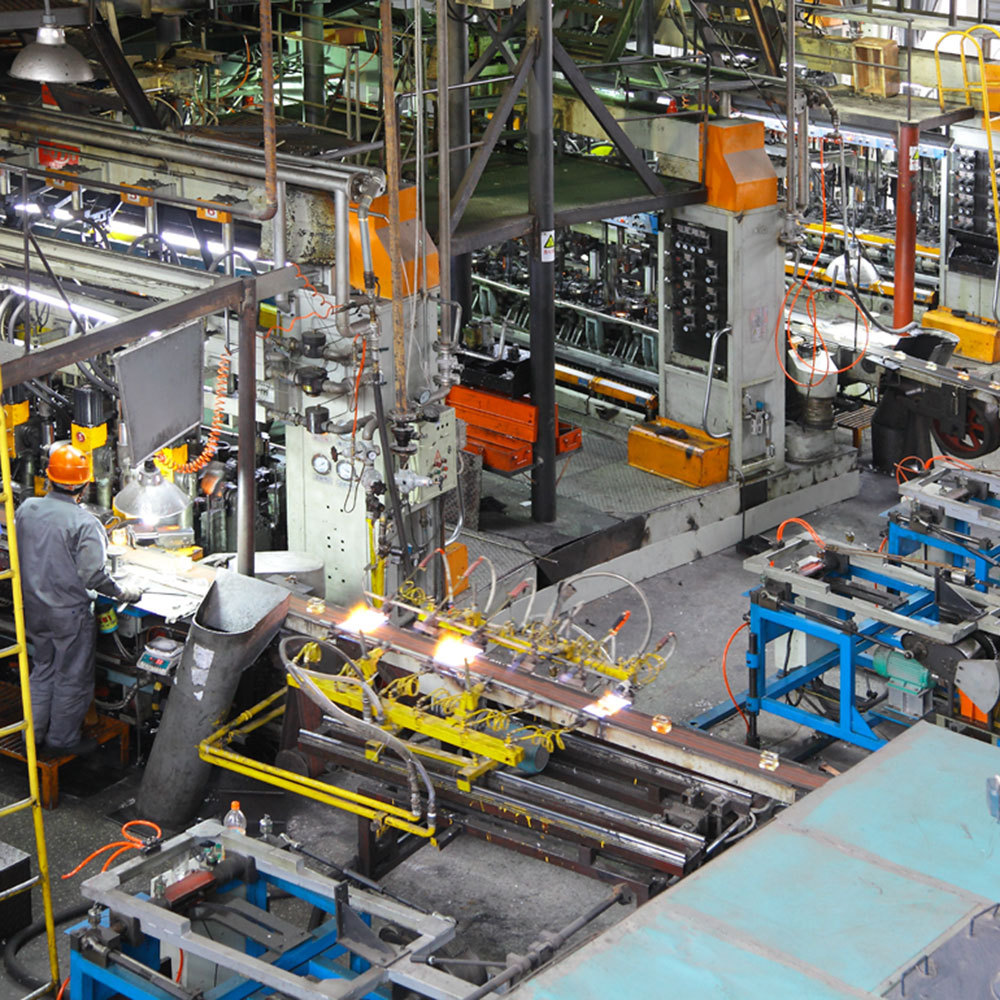
Every perfume bottle on a shelf begins as a pile of sand and minerals. Through a tightly controlled chain of melting, forming, annealing, decorating and assembly, that raw batch becomes a flawless glass vessel — strong enough to survive filling lines, warm warehouses and international shipping, yet clear and elegant enough to carry a fragrance. This is the full journey, step by step.
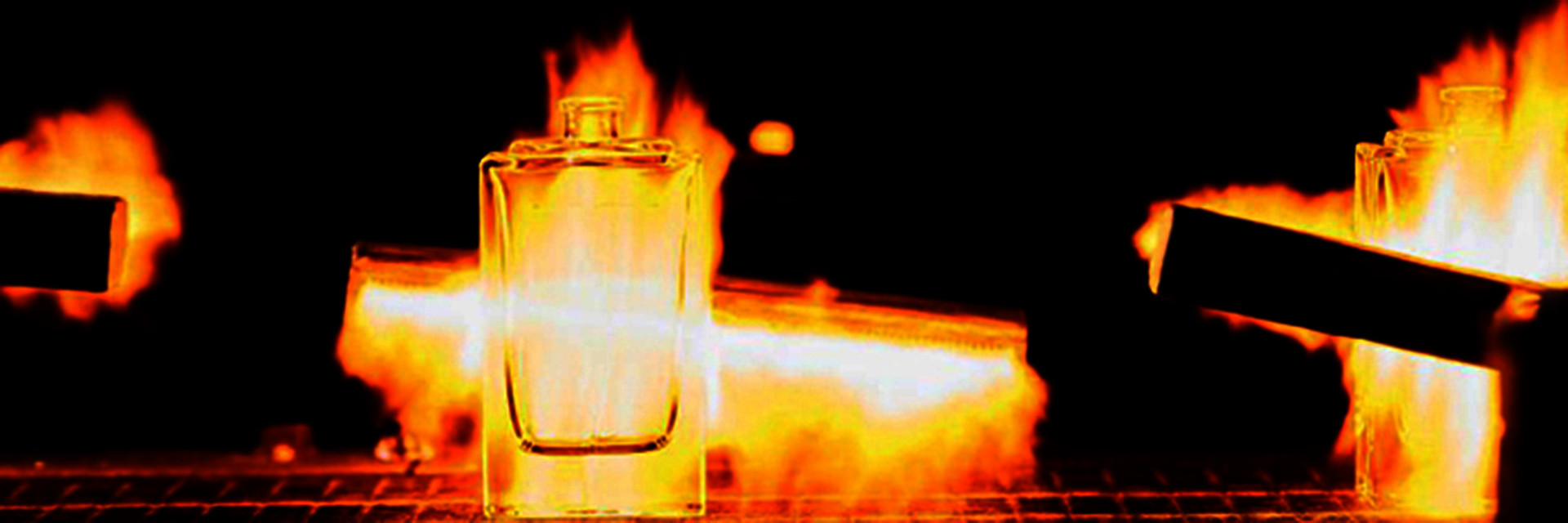
A perfume bottle is made in five stages: raw materials (silica sand, soda ash, limestone and recycled cullet) are melted into glass at about 1,500 °C; the molten glass is formed into a bottle by blow-and-blow or press-and-blow molding; it is annealed in a lehr to remove internal stress; it is decorated with coating, printing or metallization; and finally it is fitted with a cap, collar and pump before 100% inspection and packing.
What goes into the glass: the raw-material batch
Perfume bottles are almost always made from soda-lime glass, chosen for its clarity, low cost and easy formability. The batch is a precise blend of natural minerals, weighed and mixed before it enters the furnace:
The fourth ingredient, cullet, is recycled glass crushed from the plant's own rejects and returned to the melt. Because cullet melts at a lower temperature than virgin minerals, every 10% of cullet added cuts furnace energy use by roughly 2–3%, which is why modern lines run up to 90% recycled content.
| Ingredient | Typical share | Role in the glass |
|---|---|---|
| Silica sand | 70–75% | Glass network former (SiO&sub2;) |
| Soda ash | 12–15% | Lowers melting point |
| Limestone | 5–10% | Durability & chemical resistance |
| Cullet (recycled) | up to 90% | Cuts energy & emissions |
Melting: turning sand into molten glass at 1,500 °C
The blended batch feeds into a continuous gas-fired furnace that runs around the clock — often for years without shutdown. Inside, temperatures of 1,500–1,600 °C fuse the minerals into a homogeneous liquid, and a refining stage lets trapped gas bubbles rise out of the melt. A complete melt takes 8–12 hours.
Why temperature stability matters: a deviation of just ±5 °C can introduce bubbles or striae — visible streaks — into the finished glass. Consistent furnace chemistry is what gives every bottle its uniform color, wall thickness and strength.
From the furnace, the glass flows to a forehearth where it is conditioned to a precise working temperature, then sheared into uniform, honey-like blobs called gobs — each weighing exactly what one bottle requires.
Forming the bottle: blow-and-blow vs press-and-blow
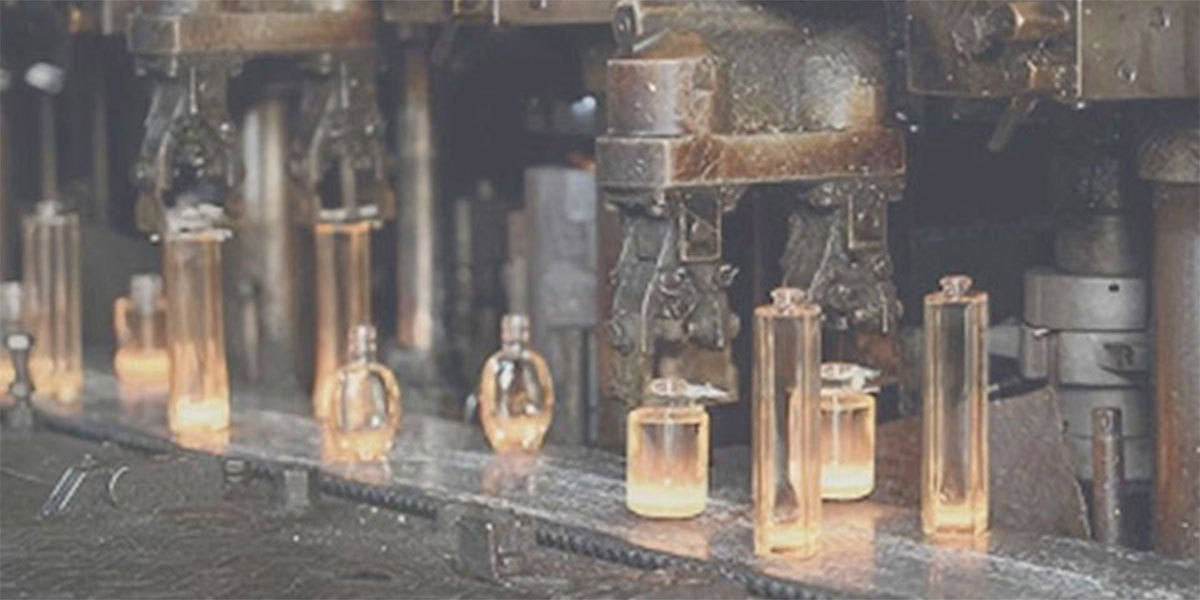
Gobs drop into an Individual Section (IS) machine, where a blank mold shapes them into a preliminary form (the parison) before a final mold completes the bottle. Two methods dominate, and they produce different kinds of bottle:
| Method | How it works | Best for | Key advantage |
|---|---|---|---|
| Blow-and-blow | Compressed air forms the parison, then a second blow expands it in the final mold | Narrow-neck, thin-walled bottles | High neck-finish accuracy, fast (8–12 s per bottle) |
| Press-and-blow | A metal plunger presses the gob into the parison before the final blow | Wide-mouth and heavy-base designs | Tighter wall-thickness control; enables a thick, luxurious base |
Press-and-blow is also the engine behind narrow-neck press-and-blow (NNPB) lightweighting, which can cut bottle weight by 20–30% while keeping full strength — a favourite for brands balancing premium heft with lower freight cost.
Mold making: the tooling behind every shape
Before a single gob is formed, the bottle's shape already exists in steel. A mold is the exact negative of the finished bottle, machined to define its dimensions, wall thickness and neck finish. Because any imperfection in the tooling shows up on every unit that follows, mold quality is the single biggest driver of dimensional accuracy — and the largest up-front cost in a custom project. That is why custom-bottle programs pair a technical drawing with a precision-cut mold, and why reusing an existing mold can cut both lead time and tooling cost for buyers working to a budget.
Annealing: the hidden step that prevents breakage
A freshly formed bottle emerges from the mold at roughly 550–600 °C and looks finished — but its skin has cooled faster than its core, locking in internal stress. Left untreated, the simple act of filling it with room-temperature fragrance can shatter it.
That is why every bottle passes through an annealing lehr, a tunnel oven 30–60 metres long. Bottles are reheated to the annealing point — around 520–560 °C for soda-lime glass — held there so the stressed structure can relax, then cooled slowly along a controlled gradient over 30–90 minutes.
Never skip annealing. Under-annealed glass passes visual inspection, then bursts days later on the filling line or in a warm warehouse. Reputable plants verify every batch with a polariscope, which renders residual stress as colored fringes — and they keep the lehr temperature profile on record for audit.
Surface decoration: from plain glass to brand statement
A bare bottle is only a canvas. Decoration is where a standard container becomes a recognizable product, and because perfume is largely alcohol — a powerful solvent — the coatings must survive contact with it:
- Color coating — matte, gloss, gradient or soft-touch spray finishes, using alcohol-resistant polyurethane coatings.
- Silk-screen & pad printing — logos and text, using ceramic inks fired at 500–600 °C so they fuse into the glass.
- Hot-foil stamping — metallic gold or silver branding pressed onto the surface.
- Acid etching & frosting — a silky matte finish diffused evenly, more durable than sandblasting.
- Metallization & laser engraving — for premium, tactile or high-relief detailing.
Cap, collar and pump assembly: why the neck finish matters
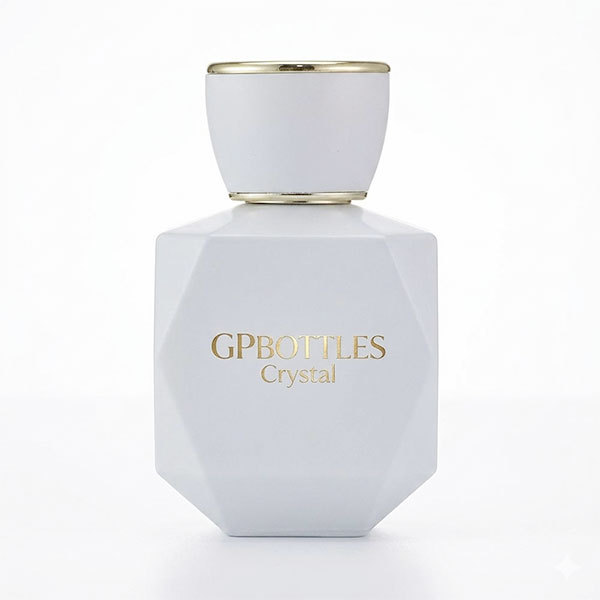
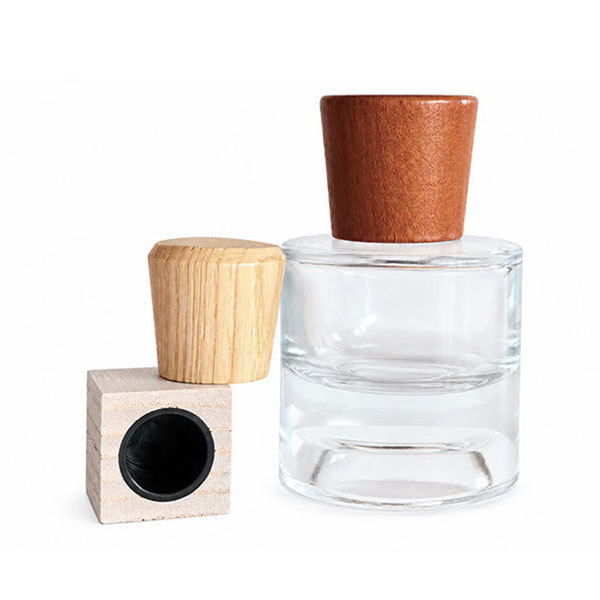
The bottle's neck finish is its most precise feature. It is molded to a standard — commonly the FEA system — so that a pump, crimp collar and cap from any supplier fit and seal correctly. In assembly, the atomizer pump is inserted and the aluminum collar is crimped tightly around the neck, creating an airtight seal that stops evaporation and leakage. Caps and collars are then tested for fit, torque and seal before the bottle moves on.
Quality control: 100% inspection, not spot checks
On a modern line, every single bottle — not a sample — passes through automated inspection before it ships. A typical sequence runs:
- 1Squeeze test applies controlled side pressure to reject weak bottles.
- 2Camera & check inspection finds cracks, stones, bubbles and dimensional drift beyond ±0.3 mm.
- 3Polariscope check confirms annealing removed residual stress.
- 4Finish & capacity verification measures the neck, threads and fill volume.
- 5Leak & pressure testing proves the seal on pumps and collars.
Rejected bottles are recycled back into the melt as cullet, so nothing is wasted.
Sustainability in modern bottle making
Glass is infinitely recyclable without loss of quality, which makes it one of the more sustainable packaging choices — and one the industry is actively improving. Three levers dominate: high cullet ratios (up to 90%) that cut furnace energy and emissions; NNPB lightweighting that trims 20–30% of material from each bottle; and refillable or reusable designs that keep a single bottle in service for years. For a brand, choosing recycled-content glass and a durable, refillable format is a credible way to reduce the carbon footprint of fragrance packaging without sacrificing elegance.
Frequently asked questions
Why is annealing so critical?
Forming cools the surface faster than the core, creating internal stress. Without annealing, bottles can crack spontaneously during filling, transport or storage. The lehr reheats and slowly cools the glass to relieve that stress.
What is the difference between blow-and-blow and press-and-blow?
Blow-and-blow uses air in both stages and suits narrow-neck bottles. Press-and-blow uses a metal plunger first, giving tighter wall control and enabling heavy bases — ideal for wide-mouth and luxury designs.
Can I customize the decoration and closure?
Yes. Coating, printing, hot stamping, frosting, metallization and custom caps, collars and pumps can all be specified to match your brand, with the neck finished to FEA standards for a reliable seal.
Want to turn your design into a finished bottle? GPBottles runs the full chain — custom molding, REACH-compliant soda-lime glass and complete decoration — with low-MOQ runs for niche and indie fragrance brands. See our perfume bottle catalog or send an inquiry, and our team will reply within 24 hours.