Low MOQ Custom Perfume Bottles: A Sourcing Guide for EU & US Niche Brands
- Share
- publisher
- GPBottles
- Issue Time
- Aug 31,2026
Summary
A sourcing guide for EU and US niche fragrance brands: realistic MOQ tiers from 2,000-piece decorated stock to 10,000-piece private molds, low-MOQ decoration options with lead times, EU 1223/2009 and US MoCRA compliance checkpoints, a stage-by-stage timeline, and a supplier verification checklist drawn from GPBottles' custom perfume bottle production.
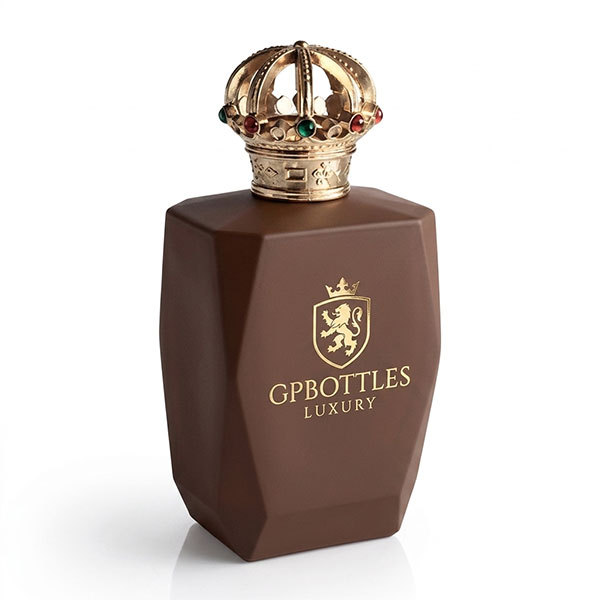
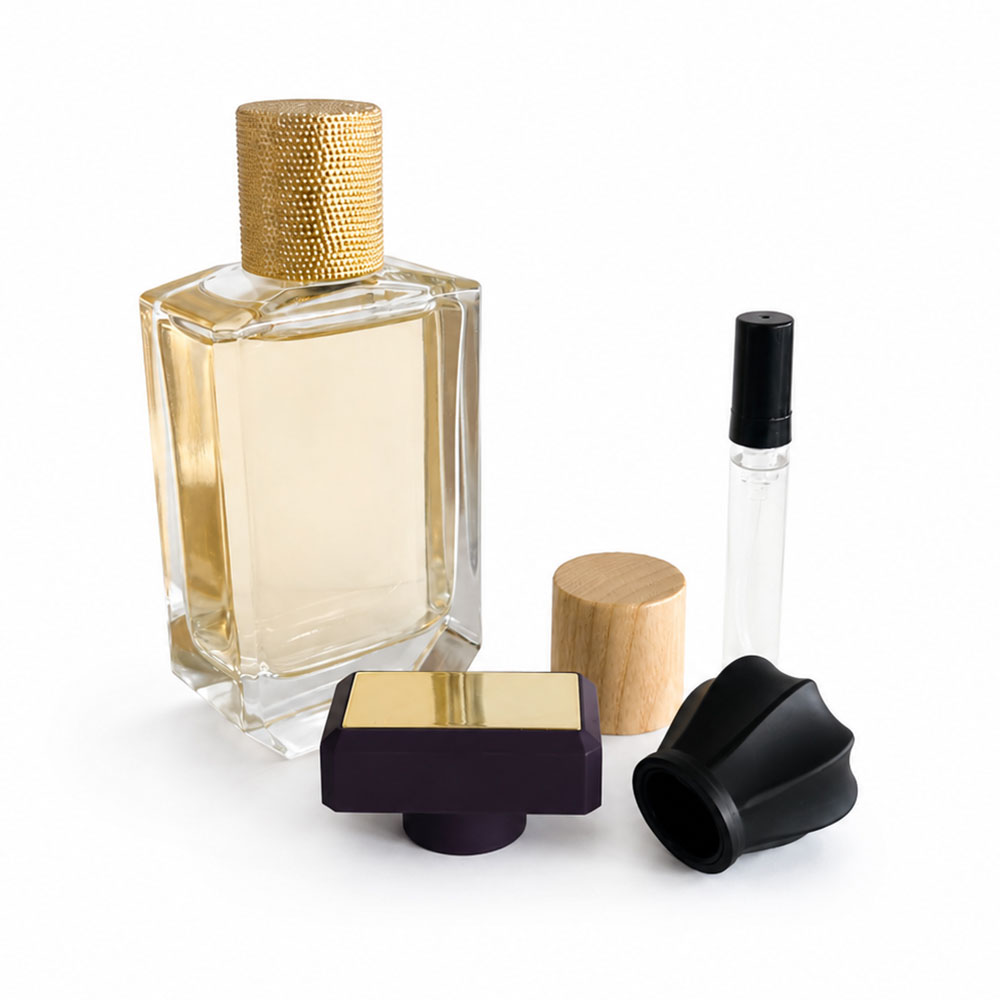
Short answer for busy sourcing teams: a genuinely custom-looking perfume bottle starts at roughly 2,000 pieces for a decorated stock bottle and near 10,000 pieces for a fully private mold. Everything that separates a smooth launch from an expensive lesson lives in the gap between those two numbers.
This guide consolidates what a working ODM sees across more than a decade of custom perfume bottle production for brands in over 60 countries: realistic MOQ tiers, decoration choices that survive small batches, the EU and US compliance checkpoints that changed between 2024 and 2026, and a timeline you can plan a launch around.
Why Low MOQ Matters for Niche Fragrance Brands
Niche and indie perfume houses live or die on cash flow and speed. Low minimum order quantities turn packaging from a bet into a test:
- Validate before you invest. Test a scent and its packaging on a 2,000 to 5,000-piece run instead of betting the whole launch budget on a private mold.
- Preserve working capital. Glass, caps and pumps are paid upfront. Smaller batches keep cash free for formulas, marketing and refill programs.
- Iterate seasonally. EU and US shoppers expect freshness. Rotate limited editions, holiday flacons and discovery sets without dead stock.
- De-risk compliance. When a labeling rule changes, redoing 3,000 pieces is far cheaper than redoing a warehouse of 50,000.

What "Low MOQ" Really Means: the Four Tiers
Low MOQ is not one number. It moves with how much of the bottle you actually customize. The table below reflects GPBottles’ standard program for custom perfume bottles:
| Customization level | Typical MOQ | What you get | Best for |
|---|---|---|---|
| Decorated stock bottle (silk-screen or hot-stamp logo) | ~2,000 pcs | Existing glass geometry with your branding | First launches, discovery sets |
| Sprayed or frosted finish | ~3,000 pcs | Custom color, gradient or soft-touch surface | Color-led brand identity |
| Electroplating and metallization | ~5,000 pcs | Metallic, mirror-grade finishes | Prestige and gifting SKUs |
| Private mold (bespoke shape) | ~10,000 pcs | Your own glass geometry and owned tooling | Proven products ready to scale |
Exact MOQ depends on bottle shape, mold status and finish, so treat these tiers as planning figures and confirm them in a quote. Sampling runs for validation can go lower, at a higher per-unit cost.
Decoration Options That Work at Low MOQ
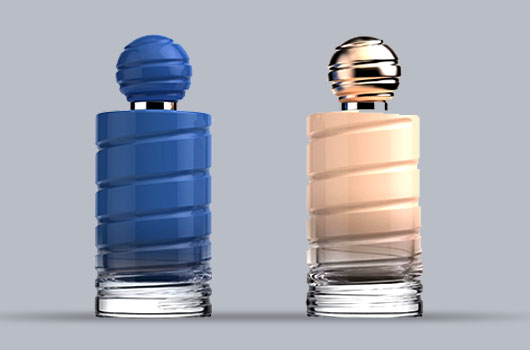
Decoration is where a blank flint bottle becomes your brand. Each technique trades visual impact against unit cost and lead time:
| Technique | Typical MOQ | Lead time after sample approval | Visual impact |
|---|---|---|---|
| Silk-screen printing | 2,000 pcs | 7 to 10 days | Crisp logos, one to three spot colors |
| Hot stamping | 2,000 pcs | 7 to 10 days | Metallic foil, luxury cues |
| Spraying: frosted, gradient, soft-touch | 3,000 pcs | 10 to 15 days | Full-color identity |
| Electroplating / metallization | 5,000 pcs | 15 to 20 days | Mirror-metallic premium |
| Private mold with full program | 10,000 pcs | 35 to 45 days | Fully bespoke geometry |
Lock these before mass production: neck finish compatibility with your pump (FEA 15/415, 18/415, 20/415), alcohol-resistance testing for prints and coatings, and a four-round AQL 2.5 inspection from incoming glass to packed cartons. At low MOQ, one bad batch is a larger share of your launch, so inspection discipline matters more, not less.
Sourcing Routes: Managed China ODM vs Local EU/US Suppliers
Both routes can work. What changes is where your time and risk go:
| Factor | Managed China ODM | Local EU/US supplier |
|---|---|---|
| MOQ flexibility | 2,000 to 5,000 pcs standard on decoration | Often 5,000+ or stock-only |
| Decoration range | Full: print, spray, plating, caps | Frequently subcontracted |
| Unit cost | Lower at an equal quality tier | Higher; logistics simpler |
| Lead time | 30 to 45 days production, plus 25 to 35 days sea freight | Shorter transit, longer queues |
| Compliance support | CPNP and MoCRA documentation on request | Easier site audits |
| Best fit | Brands scaling on a budget | Local-market-only SKUs |
China’s vertically integrated clusters keep component suppliers within roughly 50 km of assembly, enabling just-in-time runs and the flexible MOQs niche brands need. The trade-off: you must own the quality system, which is exactly the gap a managed ODM partner closes.
Compliance First: EU 1223/2009 and US MoCRA
A beautiful bottle that fails compliance is a recall waiting to happen. The two target markets regulate differently, and both changed recently.
European Union: Regulation (EC) No 1223/2009
- Safety assessment (Articles 3 and 10) covers packaging. Annex I requires the safety report to address the purity and stability of the packaging material.
- EU Responsible Person and CPNP. Appoint an EU-based entity and notify the product via CPNP before launch, backed by a Product Information File.
- Substance limits. Lead, cadmium, mercury and hexavalent chromium together below 100 ppm under the packaging framework; REACH requires disclosure of SVHCs above 0.1% w/w.
- Fragrance allergens. Annex III amendments are phasing in expanded allergen declarations this decade. Build label artwork to the current list, not an old template.
- PPWR and EPR. From 2025 the packaging regulation tightens recyclability and producer responsibility, with harmonised labelling phasing toward 2028. Plan the second artwork version now.
United States: MoCRA (2024 to 2025)
- Facility registration and listing. Mandatory since July 1, 2024; new products must be listed within 120 days of marketing.
- Label contact (Section 606, effective December 29, 2024). Every label must name the Responsible Person and show a US address, phone number or functioning electronic contact for adverse-event reports.
- Serious adverse events. Report to FDA within 15 business days and keep records for six years.
- Safety substantiation. The Responsible Person must hold safety records and produce them on request.
- Small-business exemption. Brands with US average gross sales under about $1 million may be exempt from registration and listing, but not from labeling.
Canada phases in fragrance-allergen disclosure: 24 allergens from April 2026, 81 for new cosmetics from August 1, 2026, and the full list for existing products by August 2028 (Health Canada). The UK requires its own Responsible Person post-Brexit. If you sell across these markets, build the label system once, not per fire-drill.
Sources: Regulation (EC) No 1223/2009; US MoCRA (FD&C Act Sections 604 to 608); Health Canada (2026). This article is sourcing guidance, not legal advice. Confirm specifics with your Responsible Person or regulatory consultant.
A Realistic Low-MOQ Timeline
Plan the launch calendar backwards from these stages:
- Quote and feasibility (24 to 48 hours). Share target volume, decoration references and target market; receive MOQ and pricing.
- Pre-production sample (7 to 15 days). A physical bottle with your cap and finish in hand.
- Decoration proof (3 to 5 days). Print and color confirmation on the actual glass.
- Mass production (20 to 30 days). Glass forming or stock release, decoration and assembly.
- QC, packing and shipping. Four-round AQL inspection, then 25 to 35 days sea freight to main EU and US ports; air freight in 5 to 8 days at a premium.
Supplier Verification Checklist
Before wiring a deposit, put every candidate through the same filter:
- Certifications. ISO 22715 or ISO 15378 GMP for primary packaging, plus REACH and CPNP-relevant declarations.
- Quality protocol. AQL 2.5 inspection reports, spectrophotometer color matching, pressure and leak testing at 3 to 5 bar.
- Responsiveness. Benchmark against replies within 4 working hours and technical resolutions within 48.
- Samples first. Check glass clarity, weight, neck finish and decoration adhesion physically before bulk.
- Traceability. Free mold storage for reorders and batch-specific safety records.
- Transparency. A supplier without documents yet is fixable with a deadline; one who will not share them is a reason to walk away.
Frequently Asked Questions
Custom feel, yes. Custom geometry costs more. Cap customization on stock glass (wood, zamac or Surlyn caps) delivers a bespoke identity at 2,000 to 5,000 pieces, while a private mold needs roughly 10,000 pieces to be economical.
Yes, differently. The EU requires an EU-based Responsible Person and CPNP notification before launch. Under US MoCRA, your brand is the Responsible Person and must show domestic contact information for adverse-event reporting on every label.
Yes, and it is the recommended path. Validate the scent and packaging with decorated stock, then invest in a private mold once sales justify the 10,000-piece commitment and longer timeline.
Sampling runs can go lower for pure validation, at a higher per-unit cost. For a decorated production run, about 2,000 pieces is the practical floor.
Key Takeaways
- Treat 2,000 pieces as the practical entry point for a custom-feeling bottle; keep 10,000 for a private mold you have earned.
- Decoration, not geometry, delivers identity at low MOQ: silk-screen and hot stamping from 2,000 pieces, spraying and plating above.
- Compliance is a design input: EU CPNP and PIF documents plus US MoCRA label contacts must be planned before artwork is locked.
- Vet suppliers on documents and samples, not promises, then scale in steps.
Ready to pressure-test your packaging plan? Request a low-MOQ quote from GPBottles and confirm exact tiers for your bottle shape and decoration.