The Ultimate Guide to Perfume Bottle Neck Finishes (FEA Standards Explained)
- Share
- publisher
- GPBottles
- Issue Time
- Sep 14,2026
Summary
What is a perfume bottle neck finish? Compare FEA 13, 15, 18 and 20 sizes, EN 14854 tolerances, crimp vs screw closures and leak tests before you cut tooling.


A neck finish is the standardized glass opening at the top of a perfume bottle: outer diameter, sealing bead, neck height and bore. It decides which pump ferrule, collar and cap can seal the bottle. Specify it wrong and you get leaks, tilted actuators and closures that never seat on the line.
Locking it down before freezing the bottle drawing avoids the costliest failure in fragrance packaging: thousands of units that cannot be closed. This guide covers the FEA sizes, the standards behind them, tolerances, closure choices and testing.
Quick answer for busy buyers
For a 30–100 ml fragrance: specify a crimp finish to FEA 15, hold the glass within ±0.20 mm, buy pump and collar as one matched set, and run a 7–14 day compatibility test before tooling.
What a neck finish actually measures
It is a cluster of dimensions, each controlling one behaviour in assembly. EN 14854 labels them with symbols; these are the ones worth knowing:
| Dimension | What it is | What it controls |
|---|---|---|
| ØA — sealing bead | Widest top ring | Gasket seal and crimp grip |
| ØB max — under-flange | Neck width below the bead | Collar skirt and jaw clearance |
| ØC — bore | Opening the dip tube passes | Pump fit and evaporation path |
| H min — neck height | Usable finish length | Collar coverage, crimp depth |
| E — bead position | Bead height versus top | Crimp depth without glass stress |
Two drawings that both say "FEA 15" can differ enough to fail assembly. Ask for a dimensional report, not just a size label.
The FEA size family: 13, 15, 18 and 20
Finishes are named for nominal neck diameter in millimetres. You may also see 13/400 or 15/400 — the second number is a finish-height code from an older convention, not millimetres.
| Finish | Neck OD | Collar / ferrule OD | Capacity | Used for |
|---|---|---|---|---|
| FEA 13 | 13.0 mm | about 14.3 mm | 5–15 ml | Miniatures, travel spray, vials |
| FEA 15 | 15.0 mm | about 16.3 mm | 10–100 ml | Default for fine fragrance |
| FEA 18 | 18.0 mm | about 19.2 mm | 100 ml and up | Large retail bottles, body mist |
| FEA 20 | 20.0 mm | about 21.0 mm | Jumbo formats | Room spray, decanters |
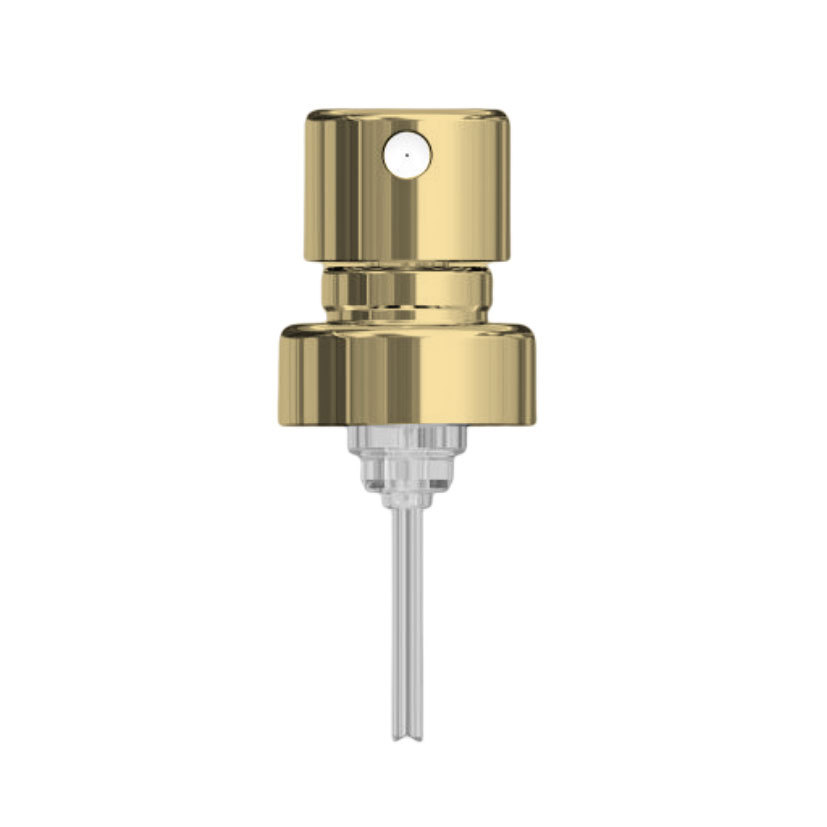
FEA 15 dominates because its collar supply chain is the deepest, keeping every downstream option open. Drop to 13 only when the bottle really is tiny; step up to 18 or 20 when you need more product per press.
Where the standard lives: EN 14854 and EN 14849
"FEA" is trade shorthand. The written specification is EN 14854, Glass packaging — neck finishes for aerosol and spray glass containers (CEN/TC 261). Its 2021 revision covers moulded and tubular glass at nominal FEA 11, 13, 15, 17, 18 and 20, read together with EN 14849, which fixes the ferrule dimensions that close onto those finishes. CETIE guides cover crimping practice and test methods. Naming them turns "please make sure it fits" into measurable conformity.
Realistic tolerances: glass side and metal side
A crimp seal has no adhesive and cannot be adjusted afterwards, so the glass and the metal must meet inside a very narrow window.
Glass neck
Hold neck diameters to about ±0.15–0.30 mm. Beyond ±0.30 mm, pumps stop sealing and alcohol loss starts.
Aluminium collar
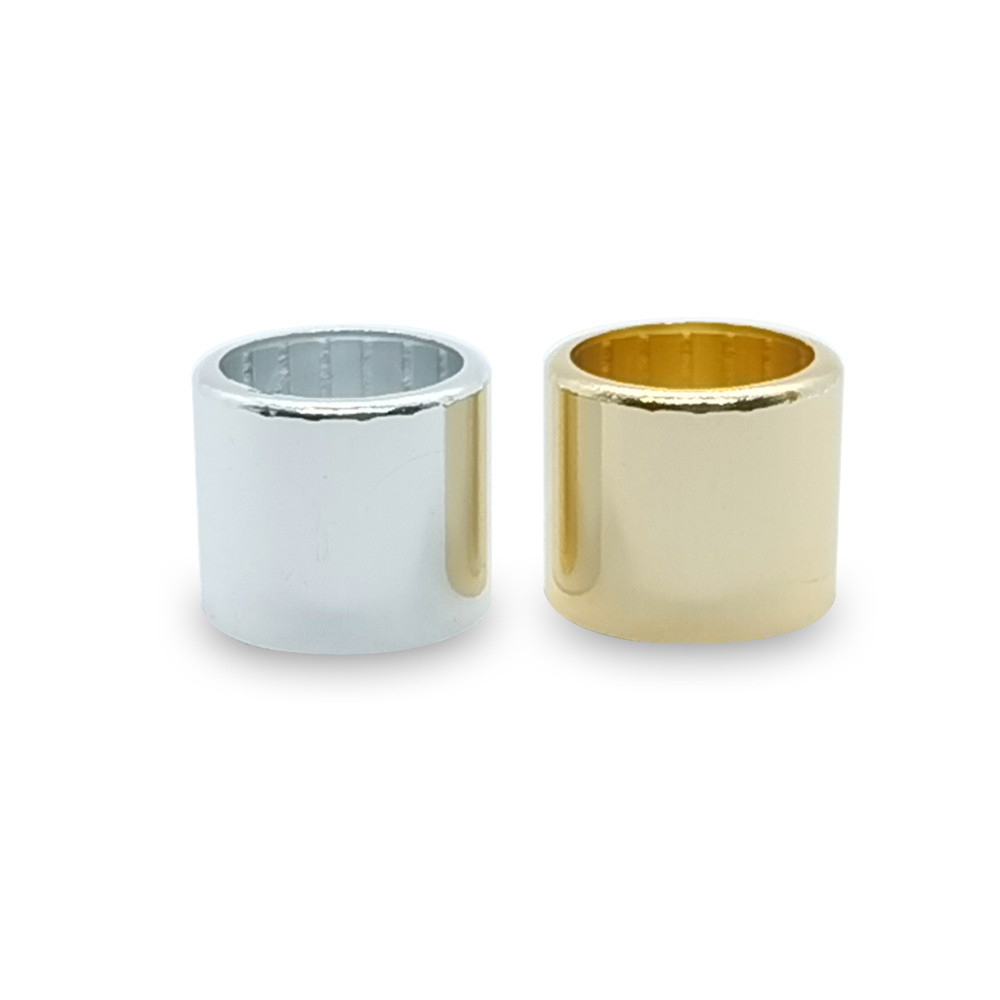
CNC-turned parts hold the bore to +0.00 / −0.03 mm, OD and step depth to about ±0.05 mm.
Concentricity
Keep the step within 0.03 mm TIR so the actuator does not lean.
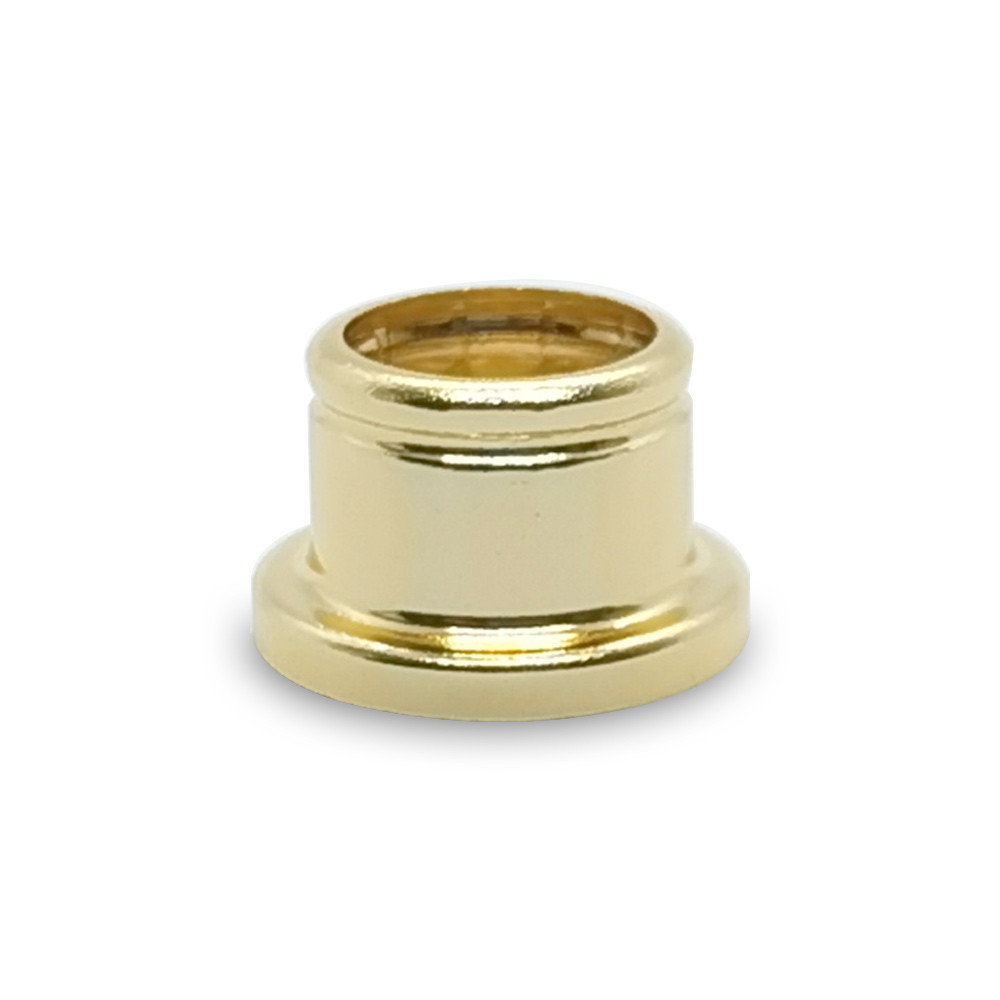
Inspection usually combines a 0.01 mm caliper, go/no-go ring gauges and a magnified check of the bead for chips. Cast or sintered parts cannot hold these figures.
Crimp, screw, crimpless or snap-on
| System | Sealing | Tamper evidence | Best for | Watch out for |
|---|---|---|---|---|
| Crimp | Ferrule rolled under the bead | Inherent | Fine fragrance, 5–100 ml | Needs crimping heads |
| Screw | Collar torques onto a thread | Break band only | Refillable ranges, gift sets | Over-torque strips threads |
| Crimpless | Finned insert grips the bore | Weak | Sampling, short runs | Low pull-off resistance |
| Snap-on | Friction over a simple bead | No | Budget travel sizes | Least secure seal |
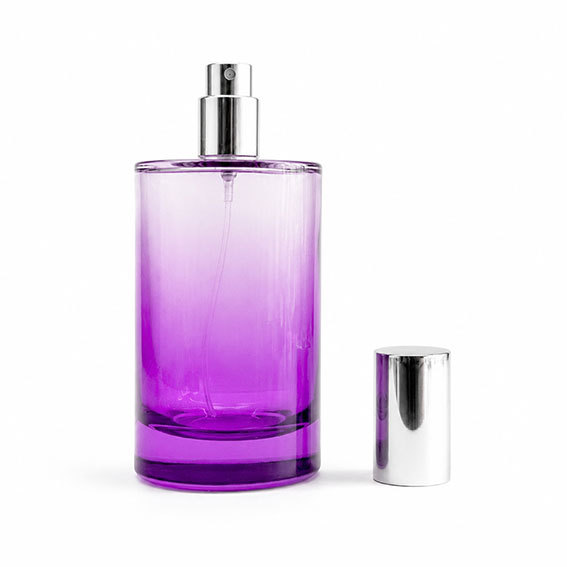
Crimp and screw necks need different glass mould tooling, so changing your mind later means starting again. Decide the closure together with the capacity.
Where leaks actually come from
Nearly every leakage case we troubleshoot traces back to one of these, and each is visible before filling.
| Cause | Symptom | Fix |
| Undersized neck, worn mould | Ferrule wrinkles; slow alcohol loss | Gauge every lot |
| Bead oversized or out of round | Pump will not seat; actuator tilts | Tighten ØA and E |
| Uneven crimp pressure | Some loose, some over-compressed | Log head pressure per tool |
| Mixed sources labelled "FEA 15" | Parts fit drawing, not each other | Buy the set; run a fit trial |
| Gasket clashes with high-alcohol juice | Swelling, lock-up, delayed leaks | Gasket rated for your ABV |
| Dip tube cut wrongly | Bottle will not empty; tube kinks | Leave 1–2 mm base clearance |
The assumption that costs the most
Two "FEA 15" components from two suppliers are not automatically interchangeable. The nominal diameter is identical; the achieved tolerance band is not. Build one physical sample set with the real pump before approving anything.
A workflow that prevents rework
Freeze capacity and closure first
Volume and dispensing system define the finish family.
Write the finish into the drawing
Cite EN 14854:2021 and list ØA, ØB, H, E with tolerances.
Buy pump, collar and cap as one set
One accountable source ends the "not my part" argument.
Confirm the dose per press
Fine-mist atomisers deliver about 0.05–0.12 ml per stroke.
Build 20–30 hand samples
Crimp with the same tooling class the line will use.
Test, then audit the first lot
Run the matrix below on real juice, then re-measure necks from the first pallet.
Testing before you approve a run
| Method | Typical parameters | What it finds |
|---|---|---|
| Vacuum decay | Roughly −50 to −80 kPa | Micro leaks, bottle stays dry |
| Bubble submersion | Tank vacuum −30 to −70 kPa | Exact location of the leak path |
| Pressure drop, empty glass | +100 to +300 kPa, 2–5 s | Cracks and bad seams before filling |
| Stability at 40 °C | Filled units, 7–14 days, then re-test | Gasket swelling, scent shift, pump failure |
Compliance checklist for EU and US shipments
- REACH declarations for glass, coating, collar and plastic parts.
- FDA contact-grade documentation for the US market.
- Prop 65 statement where a listed substance is present.
- Heavy metal and migration testing on decorations.
- Transit simulation on sealed units — alcohol fragrance ships as UN 1263.
Frequently asked questions
Is FEA 15 the same as 15/400?
Same finish family. FEA 15 is the European designation; 15/400 uses the older "diameter / finish-height code" convention, so 400 is not millimetres. Match on diameter and standard reference.
Can I put a screw cap on a crimp neck?
Not unless the glass was moulded with a thread. Hybrids exist, but a standard FEA crimp neck has nothing to engage. Choose the screw finish at drawing stage if refillability matters.
Which tolerance should I specify?
Request ±0.15 mm to ±0.30 mm on critical neck dimensions, expecting ±0.20 mm in production. On the collar, ask for bore +0.00 / −0.03 mm and concentricity within 0.03 mm TIR.
Specify once, then produce
The neck finish is decided once, early, and everything downstream depends on it. Match the FEA size to your capacity and dosing target, hold the tolerance tight enough to seal, buy the dispensing parts as one set, and prove it with the tests above.
Next step
Send your drawing or target capacity. We will confirm the finish, recommend a matched pump and collar, and ship samples for your own compatibility test.
Request samples and a quote Talk to an engineerReferences
- EN 14854:2021, Glass packaging — neck finishes for aerosol and spray glass containers, CEN/TC 261.
- EN 14849, dimensions of aerosol valve ferrules.
- ASTM F2338 vacuum decay and ASTM D3078 bubble emission leak testing.